Indoor air quality is an important part of maintaining a comfortable, professional, and well-managed office environment. For many commercial property owners and facility managers, the first signs of an indoor air quality concern may be subtle. Employees may notice stale air in certain areas, dust collecting around vents, lingering odors, uneven temperatures, or meeting rooms that feel stuffy after regular use.
While indoor air quality can be influenced by many factors, the condition of the HVAC system plays a major role in how air moves throughout a commercial office. Ductwork, air handlers, coils, blower wheels, plenum boxes, and filters all work together to circulate conditioned air through occupied spaces. When these components become dirty or restricted, the system may not move air as effectively as it should.
For commercial buildings, HVAC cleanliness is more than a basic maintenance task. It supports airflow, helps reduce the circulation of built-up debris, and contributes to a more comfortable indoor environment. Professional duct cleaning and HVAC restoration can help address hidden contamination inside the system rather than only cleaning what is visible around vents and registers.
Real Duct Cleaning works with commercial properties that need thorough HVAC cleaning, source removal, air handler cleaning, coil cleaning, blower wheel cleaning, plenum box cleaning, and duct cleaning. By focusing on the full system rather than only the surface-level symptoms, commercial property teams can better maintain the cleanliness and performance of their HVAC equipment.
Is It Sick Building Syndrome? Signs Your Office Air Needs Attention
When several employees report feeling unwell at work but improve once they leave, it may point to “sick building syndrome”—a pattern of symptoms tied to poor indoor air quality. The EPA ranks indoor air pollution among the top environmental risks to public health, and a contaminated HVAC system is one of the most common contributors in office buildings.
Watch for these warning signs across your workforce and facility:
- Employees complaining of stuffy, stale, or “heavy” air, especially in conference rooms and closed offices.
- Dust settling on desks, monitors, and surfaces shortly after cleaning.
- Headaches, fatigue, congestion, or irritated eyes and throats that ease when staff leave the building.
- Lingering or musty odors near vents, returns, or break rooms.
- Uneven temperatures and weak airflow from one area to another.
These symptoms often trace back to dust, debris, and microbial growth circulating through the ductwork. Because the HVAC system acts as the building’s lungs, contaminants inside it are distributed to every room each time the system runs. A professional inspection identifies whether hidden buildup or biological toxins in the system are part of the problem.
What Is Indoor Air Quality in Commercial Offices?
Indoor air quality refers to the condition of the air inside a building and the factors that influence how that air feels, smells, and circulates. In an office setting, indoor air quality can be affected by ventilation, filtration, humidity, cleaning products, building materials, outdoor air entering the property, and the cleanliness of the HVAC system.
A commercial office is a busy indoor environment. People move in and out throughout the day. Doors open frequently. Printers, furniture, flooring, cleaning supplies, and outdoor particles can all contribute to the air inside the building. Over time, some of these particles can enter the HVAC system and collect in ductwork or mechanical components.
When an HVAC system is clean and maintained, air can move more freely through the building. When buildup develops inside the system, airflow may become less consistent. Some rooms may feel warmer, cooler, dustier, or more stagnant than others. These issues do not always mean the HVAC system is failing, but they can be signs that the system needs inspection or cleaning.
Maintaining office indoor air quality usually requires a combination of steps. Filters need to be changed regularly. Moisture issues should be addressed quickly. Ductwork and HVAC components should be inspected when there are signs of buildup. In many cases, professional cleaning is needed because the most important components are hidden behind access panels, inside air handlers, or within the duct system itself.
Why HVAC System Cleanliness Matters in Office Buildings
The HVAC system is responsible for moving conditioned air throughout the office. Because so much air passes through the system each day, the cleanliness of its internal components can affect the overall indoor environment.
Dust and debris can collect inside return ducts, supply ducts, blower compartments, coils, and plenum boxes. If these areas are not cleaned, the system may continue moving air across contaminated surfaces. This can contribute to recurring dust, musty odors, and reduced airflow in certain parts of the building.
A clean HVAC system can help support better air movement. When air pathways are clear and mechanical components are properly maintained, the system is better positioned to distribute air throughout the office. This does not replace regular HVAC service, filter changes, or ventilation planning, but it is an important part of maintaining the system as a whole.
Commercial buildings often have larger and more complex HVAC systems than residential properties. They may include multiple air handlers, longer duct runs, shared ventilation areas, rooftop units, and high-traffic zones that place extra demand on the system. Because of this, a quick vent cleaning or basic surface service may not be enough to address deeper contamination.
Real Duct Cleaning focuses on source removal and full-system cleaning. This means identifying where buildup is located and removing it from the system rather than simply disturbing or masking it. For commercial offices, this approach can be especially valuable because hidden buildup may exist in areas that are rarely inspected during routine building maintenance.
Common Causes of Poor Airflow and Stale Air in Offices
Office airflow concerns can come from several sources. In some cases, the issue may involve system design or equipment performance. In other cases, the problem may be connected to buildup inside the ductwork or HVAC components.
Dust accumulation is one of the most common issues. As air circulates, fine particles can settle inside ducts, around registers, and within air handling equipment. Over time, this buildup can restrict airflow and contribute to visible dust around the office.
Dirty blower wheels can also affect airflow. The blower wheel helps move air through the system. When dust collects on the blades, the wheel may not move air as smoothly as intended. This can contribute to weaker airflow from vents and added strain on the equipment.
Coils are another important component. When coils collect dust, debris, or residue, the system may have a harder time transferring heat and managing humidity. Coil cleaning is often an important part of HVAC restoration because the coil sits directly in the path of moving air.
Plenum boxes can also be overlooked. The plenum is the main chamber where air collects before being distributed through the duct system. Because it handles a large volume of air, contamination in the plenum can affect the rest of the system. Cleaning this area can help remove buildup from one of the most important junction points in the HVAC system.
Moisture can make these issues worse. If condensation collects inside the air handler, drain pan, gutter, or plenum area, dust and organic debris may stick to surfaces more easily. Moisture-related buildup should be inspected carefully because it can contribute to odors and recurring contamination if left unaddressed.
Office Areas That Often Need More Attention
Not every part of an office building experiences the same indoor air conditions. Some areas tend to develop air quality or airflow concerns faster than others because of occupancy, activity, or equipment use.
Conference rooms and meeting rooms often feel stuffy when several people occupy the space for extended periods. These rooms may have limited air movement compared to open office areas. If the HVAC system is already restricted by dust or buildup, these spaces may feel less comfortable during regular use.
Copy rooms and printer areas can also collect particles from equipment use, paper handling, and daily activity. These rooms may benefit from good ventilation, proper filtration, and regular cleaning around returns and vents.
Break rooms and kitchens can introduce odors, moisture, and food-related particles into nearby areas. If return vents are located nearby, some of these particles may be pulled into the system. Keeping these areas clean and ensuring the HVAC system is maintained can help reduce lingering odors.
Reception areas and entryways often experience outdoor air infiltration. Foot traffic can bring in dust, pollen, and other particles. These contaminants may collect near vents, filters, or return air pathways.
Storage rooms and older office areas may also have limited airflow. When air does not circulate well, these rooms can develop stale odors or collect dust more easily. A professional inspection can help determine whether duct cleaning or air handler cleaning may help address the issue.
How Much Does Commercial Air Duct Cleaning Cost?
Commercial air duct cleaning is priced very differently from residential work. Because every building’s layout, ductwork length, system count, and access are unique, most commercial jobs are quoted per square foot or by custom scope after an on-site inspection rather than a flat rate.
The main factors that influence the cost of cleaning your office HVAC system include:
- Building size and total ductwork length—the single biggest driver of scope.
- Number of air handlers, zones, and rooftop units that must be accessed and cleaned.
- Accessibility—ductwork above hard ceilings or in tight mechanical rooms takes longer than accessible drop-ceiling plenums.
- Level of contamination—systems that haven’t been cleaned in years, or that have moisture-related buildup, require more intensive work.
- Scope of service—a full-system clean that includes coils, blower wheels, and the plenum is more thorough and more valuable than a vent-only surface cleaning.
- Scheduling—after-hours, weekend, or phased work to avoid disrupting your business may affect the quote.
The most accurate way to budget is an on-site inspection. Real Duct Cleaning provides a transparent, itemized quote so facility managers know exactly what’s included—no vague per-vent teaser pricing.
Need a Quote for Your Office or Facility?
Every commercial building is different. Our NADCA-certified team
will inspect your HVAC system on-site and give you a transparent,
itemized quote—so you know exactly what’s included.
Request a Commercial Inspection
Or call: 727-776-9779
How Professional Duct Cleaning Supports Office Indoor Air Quality
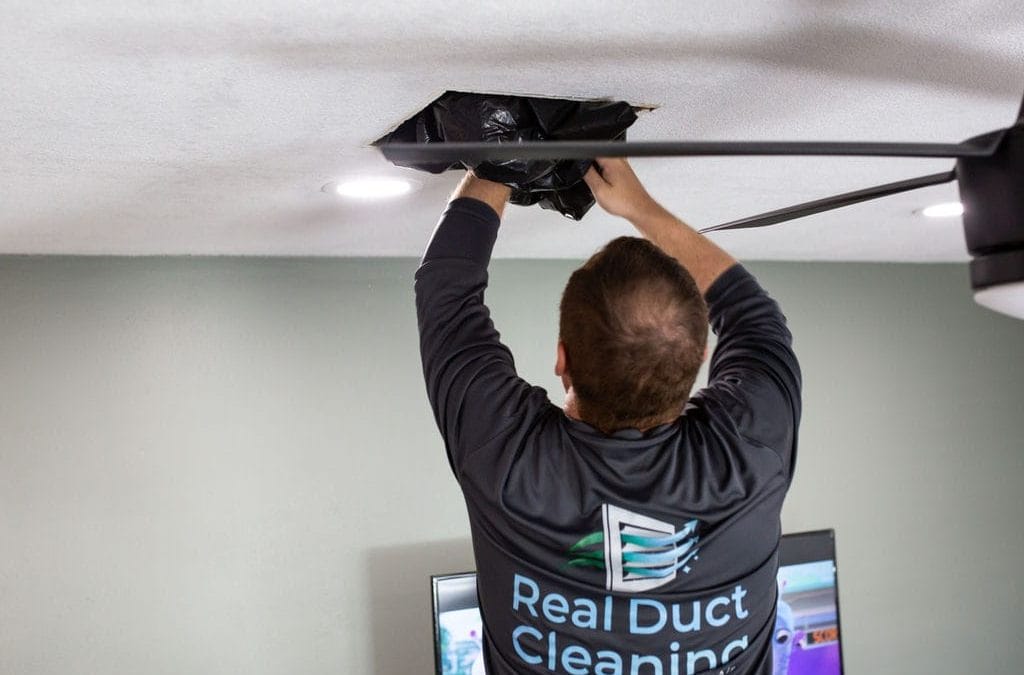
Professional duct cleaning helps remove accumulated dust, debris, and contaminants from inside the duct system. In commercial offices, this can be an important step when there are signs of visible dust buildup, recurring odors, restricted airflow, or a long history without duct maintenance.
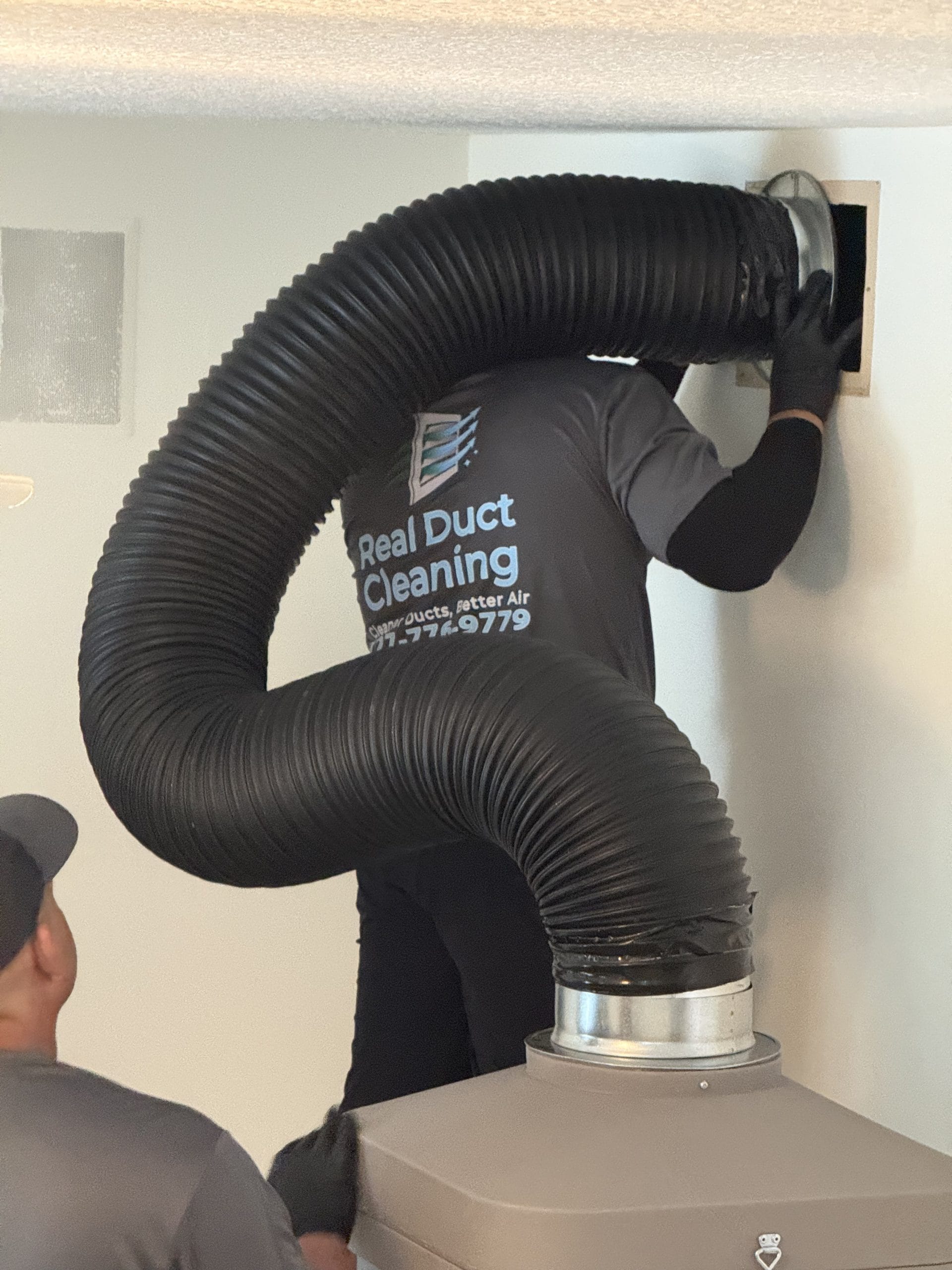
A proper duct cleaning process should focus on source removal. This means removing buildup from inside the system using professional equipment rather than pushing debris from one area to another. The goal is to clean the internal surfaces of the ductwork and reduce the amount of loose material that can continue circulating.
For office buildings, duct cleaning may involve supply ducts, return ducts, registers, grilles, and accessible duct sections. Depending on the condition of the system, technicians may also inspect connected components such as the air handler, coil area, blower assembly, and plenum box.
Duct cleaning is most effective when it is part of a broader HVAC restoration approach. If the ducts are cleaned but the blower wheel, coil, or plenum remains dirty, the system may still circulate air across contaminated surfaces. That is why Real Duct Cleaning emphasizes full-system cleaning whenever possible.
Commercial office managers should also understand that duct cleaning is not a replacement for routine HVAC maintenance. Filters still need to be changed. Mechanical components still need to be serviced by HVAC professionals. However, duct cleaning and HVAC restoration can address contamination that routine maintenance may not fully remove.
Why Air Handler Cleaning Is Important
The air handler is one of the most important parts of the HVAC system. It houses key components that move and condition air before it travels through the ductwork. Because the air handler is constantly exposed to moving air, it can collect dust, moisture, and debris over time.
Air handler cleaning may include cleaning internal cabinet surfaces, blower compartments, drain areas, and other accessible components. This helps remove buildup from the area where air movement begins.
In many commercial offices, the air handler is located in a mechanical room, rooftop unit, or restricted space that may not be inspected often. Dust and debris can accumulate for years before anyone notices a problem. By the time odors or airflow issues become obvious, contamination may already be present in multiple areas of the system.
Cleaning the air handler can help support cleaner airflow at the source. It can also help technicians identify other concerns, such as clogged drain areas, dirty coils, or blower wheel buildup. These findings can guide the next steps in the HVAC restoration process.
The Role of Coil Cleaning and Blower Wheel Cleaning
Coils and blower wheels are both critical to HVAC system performance. The coil helps with cooling and humidity control, while the blower wheel helps move air through the system. If either component becomes dirty, the office may experience reduced comfort, uneven airflow, or system strain.
Coils can collect dust, lint, and organic debris, especially because they often operate in moist conditions during cooling cycles. When buildup forms on coil surfaces, air may not pass through as efficiently. Cleaning the coil helps remove material that can interfere with airflow and heat transfer.
Blower wheels can also collect dust along the curved blades. This buildup may be difficult to remove with simple brushing because debris can settle into tight spaces. Professional cleaning allows the blower wheel to be addressed more thoroughly and helps restore cleaner air movement through the system.
Real Duct Cleaning includes these components in its HVAC restoration approach because ductwork is only one part of the system. If the mechanical components remain dirty, the building may continue to experience air quality and airflow concerns even after the ducts are cleaned.
Why the Plenum Box Should Not Be Overlooked
The plenum box is the main chamber that connects the air handler to the duct system. It acts as a distribution point for conditioned air before that air moves into different rooms or zones. Because of this, the plenum box is one of the most important areas to inspect during HVAC cleaning.
Dust, moisture, and debris can collect inside the plenum over time. If the chamber is not cleaned, contaminants may continue moving into the duct system. Unfortunately, this area is often overlooked because it is not always listed separately in standard duct cleaning services.
A thorough cleaning process should include inspection of the plenum box when access is available. Cleaning this area can help remove hidden buildup from the central junction of the HVAC system. In some situations, additional treatment may be recommended after mechanical cleaning, depending on the condition of the surfaces.
For commercial offices, plenum cleaning is especially important because the system may serve multiple rooms, departments, or shared workspaces. Addressing the plenum helps support a more complete cleaning process rather than focusing only on branch ducts or visible vents.
When Should an Office Consider HVAC Restoration?
A commercial office may benefit from HVAC restoration when there are recurring indoor air concerns that basic maintenance has not resolved. Common signs include visible dust around vents, persistent odors, weak airflow, uneven temperatures, or a long period since the last professional cleaning.
Restoration may also be worth considering after construction, remodeling, tenant turnover, water intrusion, or periods of heavy system use. Renovation dust and debris can enter the duct system if proper containment is not maintained. Older buildings may also have years of buildup inside ductwork or equipment.
A professional inspection can help determine whether cleaning is needed and which components should be addressed. In some cases, duct cleaning alone may be appropriate. In other cases, a full-system approach that includes the air handler, coil, blower wheel, plenum box, and ductwork may provide a more complete solution.
Work With Real Duct Cleaning for Commercial HVAC Cleaning
Indoor air quality in commercial offices depends on more than temperature settings and filter changes. The cleanliness of the HVAC system can influence airflow, comfort, odors, and the overall indoor environment.
Real Duct Cleaning provides commercial duct cleaning and HVAC restoration services designed to address buildup inside the system. Our team focuses on source removal, air handler cleaning, coil cleaning, blower wheel cleaning, plenum box cleaning, and duct cleaning to help commercial properties maintain cleaner HVAC systems.
For facility managers, property owners, and office managers, professional HVAC cleaning can be a practical step toward maintaining a cleaner and more comfortable building. If your office has recurring dust, stale air, musty odors, or airflow concerns, a system inspection can help identify whether hidden buildup is part of the problem.
Real Duct Cleaning helps commercial properties take a more complete approach to HVAC cleanliness, so air can move through a system that has been properly inspected, cleaned, and restored where needed.
How Often Should Commercial Office Ducts Be Cleaned?
For most offices, the general guidance is to have the duct system inspected and cleaned every three to five years. However, several conditions call for more frequent service:
- High-occupancy or high-traffic buildings that place heavy daily demand on the HVAC system.
- Recent construction, remodeling, or tenant turnover, which pushes renovation dust and debris into the ductwork.
- Water intrusion or humidity issues, which can lead to biological toxins and recurring odors.
- A location in a humid coastal climate like Tampa Bay, where moisture accelerates microbial growth inside the system.
- Recurring air quality complaints that routine filter changes have not resolved.
We schedule commercial work around your operations—after hours, on weekends, or floor by floor—so cleaning doesn’t interrupt your business. A professional inspection is the best way to determine the right interval for your specific building.
Give Your Building Cleaner Air
If your office has recurring dust, stale air, lingering odors, or airflow complaints, hidden buildup in the HVAC system may be part of the problem. Real Duct Cleaning provides full-system commercial cleaning—ductwork, air handler, coils, blower wheel, and plenum—with source removal, not surface-level shortcuts.
Schedule Your Commercial Inspection
Proudly serving Clearwater, St. Pete, Palm Harbor, Dunedin, and all of Tampa Bay. Call 727-776-9779 today.
Commercial Duct Cleaning — Frequently Asked Questions
How much does commercial air duct cleaning cost?
Commercial duct cleaning is usually priced per square foot or by custom scope after an on-site inspection, not as a flat rate. Cost depends on building size, ductwork length, the number of air handlers and zones, accessibility, contamination level, and whether the job includes coils, blower wheels, and the plenum. The most accurate way to budget is a professional inspection and itemized quote.
How often should commercial office ducts be cleaned?
Most offices should have their ducts inspected and cleaned every three to five years. Buildings with high occupancy, recent construction or remodeling, water intrusion, or a humid coastal climate like Tampa Bay may need more frequent service. Recurring air quality complaints are also a sign to schedule an inspection.
Can dirty office air ducts cause sick building syndrome?
They can contribute to it. When dust, debris, and biological toxins accumulate inside the HVAC system, they circulate to every room each time the system runs, which can trigger headaches, fatigue, congestion, and irritated eyes or throats—symptoms that typically ease when employees leave the building. Professional cleaning removes the buildup at the source.
Does commercial duct cleaning improve indoor air quality?
Yes. Removing accumulated dust, debris, and microbial growth from the ductwork, coils, blower wheel, and plenum reduces the amount of loose material circulating through the building. For best results, duct cleaning should be part of a full-system approach rather than a vent-only surface cleaning.
Can you clean our office HVAC system after hours?
Yes. We schedule commercial work around your operations—after hours, on weekends, or floor by floor—so cleaning doesn’t disrupt your staff or customers.
Do you clean more than just the ducts?
Yes. A complete service addresses the full system: supply and return ducts, registers and grilles, the air handler, coils, the blower wheel, and the plenum box. Cleaning the ducts alone while leaving other components dirty means the system can keep circulating air across contaminated surfaces.