Commercial HVAC systems work hard every day to keep offices, retail spaces, restaurants, medical buildings, schools, and other facilities comfortable. These systems move large volumes of air through ductwork, air handlers, coils, blower wheels, plenum boxes, and other internal components. When those parts are clean and properly maintained, the system is better positioned to move air as intended.
Over time, however, dust, debris, moisture, and other buildup can collect inside the HVAC system. This accumulation may restrict airflow, affect heat transfer, contribute to odors, and place added strain on equipment. For commercial facility managers, these issues can become part of a larger maintenance concern because HVAC systems are often among the most used mechanical systems in a building.
Commercial HVAC restoration focuses on cleaning the internal areas of the system that are commonly overlooked during basic maintenance. This may include ductwork, air handlers, coils, blower wheels, drain areas, cabinet interiors, and plenum boxes. The goal is to remove buildup at the source so air can move through a cleaner system.
Real Duct Cleaning provides commercial HVAC restoration and duct cleaning services for businesses that need a more complete approach than surface-level vent cleaning. By focusing on source removal and full-system cleaning, Real Duct Cleaning helps commercial properties address hidden contamination that can affect airflow, comfort, and system cleanliness.
What Is Commercial HVAC Restoration?
Commercial HVAC restoration is the process of cleaning and restoring key HVAC system components so they are free from excessive dust, debris, and buildup. Unlike simple vent cleaning, restoration looks deeper into the system.
A commercial HVAC system may include multiple air handlers, long duct runs, rooftop units, return air pathways, supply ducts, coils, blower assemblies, plenum boxes, and drainage areas. Each part plays a role in moving and conditioning air. When one section becomes heavily contaminated, the rest of the system may also be affected.
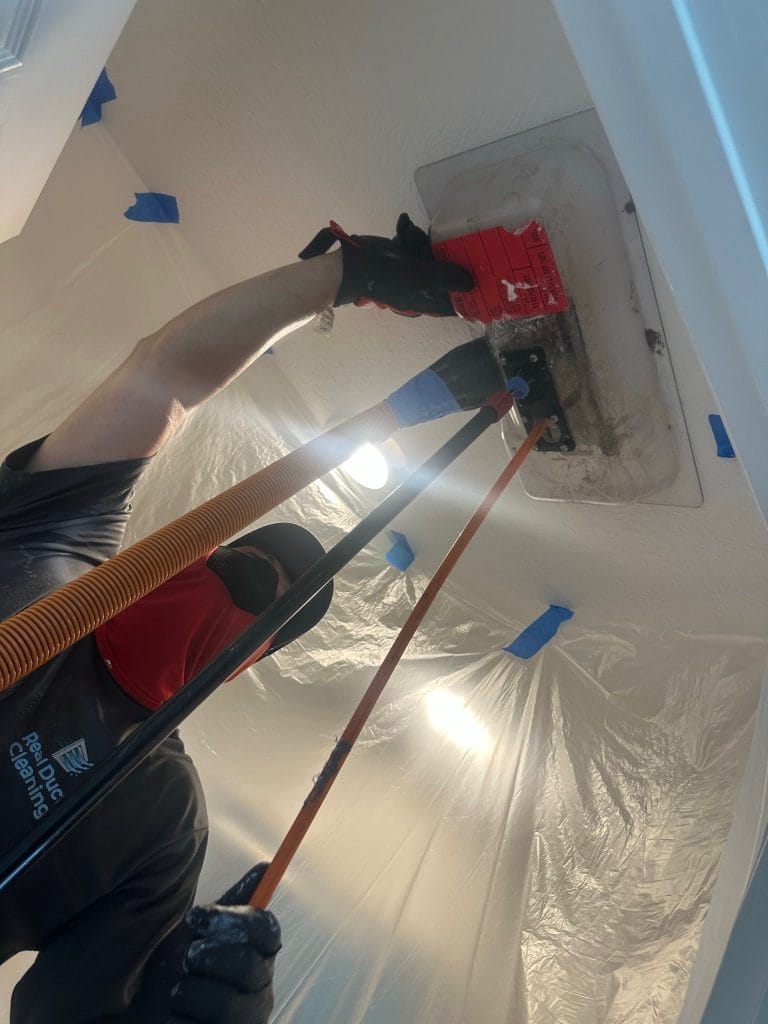
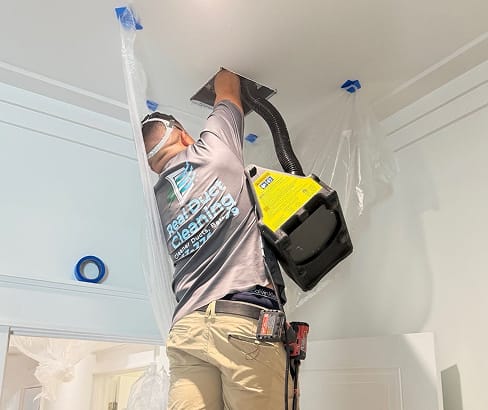
Restoration usually begins with inspection. Technicians look for visible dust, debris, moisture concerns, restricted areas, and signs that buildup has collected inside the system. From there, the cleaning process may include mechanical agitation, vacuum collection, negative air equipment, source removal methods, and component-specific cleaning.
The purpose is not to make broad promises about utility bills or system performance. Instead, the purpose is to help remove material that does not belong inside the HVAC system. Cleaner components can support better airflow and help the system operate under cleaner conditions.
Why Commercial HVAC Systems Collect Buildup
Commercial buildings typically have higher occupancy, longer operating hours, and more complex ventilation needs than residential properties. These conditions can cause HVAC systems to collect debris faster.
Air moves through the system throughout the day. As it does, particles from outdoor air, foot traffic, office activity, equipment, building materials, and normal use may enter return pathways. Filters capture some of this material, but not everything. Fine particles can still settle inside ducts and mechanical components over time.
In larger buildings, duct systems may include bends, transitions, and long runs where debris can collect. Air handlers may also accumulate dust inside cabinet surfaces and around mechanical parts. If moisture is present, dust can stick to surfaces more easily and may become harder to remove.
Commercial systems also often operate for extended periods. A system serving a busy office, retail property, or hospitality space may run for much of the day. This constant operation means more air is moving through the equipment, creating more opportunities for buildup to collect.
How Buildup Can Affect Airflow
Airflow is one of the most important parts of HVAC performance. When air cannot move properly through the system, occupants may notice uneven temperatures, weak airflow from vents, or areas that feel less comfortable.
Dust and debris inside ductwork may reduce the available space for air to move through. Dirty filters can restrict air before it reaches the rest of the system. Buildup on blower wheels can affect how smoothly air is pushed through the duct network. Dust on coils can limit how efficiently air passes across the heat transfer surface.
These issues may develop gradually. A building may not experience a sudden problem at first. Instead, facility managers may hear recurring complaints about certain rooms, notice dust returning quickly after cleaning, or find that some areas do not feel as comfortable as others.
Commercial HVAC restoration helps address these concerns by removing buildup from the areas where airflow begins, travels, and is distributed. This includes the air handler, blower wheel, coil area, plenum box, and duct system.
Why Coil Cleaning Matters in Commercial HVAC Restoration
Coils are essential to the heating and cooling process. In many systems, air passes across the coil before it moves into the ductwork. Because coils are often exposed to both airflow and moisture, they can collect dust, lint, and other debris over time.
When buildup forms on coil surfaces, air may have a harder time passing through the coil. The system may also have difficulty transferring heat as intended. This can contribute to longer run times, inconsistent comfort, or added equipment strain.
Commercial coil cleaning requires care because coils are made of delicate fins and tubing. Aggressive cleaning methods can damage the coil if not handled properly. A professional restoration process uses appropriate methods and cleaning solutions based on the condition of the equipment.
Real Duct Cleaning includes coil cleaning as part of a broader HVAC restoration approach when the coil is accessible and requires attention. Cleaning the coil can help remove buildup from one of the most important areas in the air path.
Why Blower Wheel Cleaning Is Often Overlooked
The blower wheel is responsible for moving air through the HVAC system. It draws air in and pushes it through the duct network. Because it plays such a central role in airflow, the blower wheel should not be ignored during restoration.
Dust can collect on the blades of the blower wheel. When this happens, the wheel may not move air as smoothly as designed. In some cases, buildup can also contribute to noise, vibration, or reduced airflow.
Many basic duct cleaning services do not fully address the blower wheel because it may require access to the air handler cabinet and careful cleaning around mechanical components. Surface brushing may not be enough if dust has built up in the curved blade areas.
Real Duct Cleaning understands the importance of cleaning the blower assembly as part of full-system HVAC restoration. Addressing this component helps support cleaner air movement from the source of circulation.
Why the Air Handler Should Be Part of the Cleaning Process
The air handler is one of the main areas where airflow, moisture, and mechanical operation meet. It may contain the blower, coil, drain pan, cabinet surfaces, and other internal components. Because so much air passes through this section, contamination inside the air handler can affect the rest of the system.
If the air handler is dirty, cleaning only the ducts may not fully address the problem. Air may continue passing over dusty cabinet surfaces, a dirty blower wheel, or a contaminated coil area before it reaches the ductwork.
Air handler cleaning helps remove buildup from the internal surfaces where air is moved and conditioned. It also allows technicians to inspect for other concerns, such as moisture accumulation, clogged drainage areas, or visible debris around the coil and blower section.
For commercial properties, air handler cleaning can be an important part of maintaining a cleaner HVAC system. It supports the overall restoration process and helps ensure that cleaning is not limited to the most visible parts of the system.
Why Plenum Box Cleaning Matters
The plenum box is the chamber that connects the air handler to the duct system. It helps distribute conditioned air into the supply ducts. Because all outgoing air may pass through this area, the plenum box is a critical part of the HVAC system.
Dust, debris, and moisture-related buildup can collect inside the plenum. If this area is not inspected or cleaned, contaminants may continue moving into the ductwork even after other parts of the system are serviced.
Plenum boxes are often overlooked because they are not always easy to access. Some service providers focus only on vents and ducts, leaving this central chamber untouched. For a more complete cleaning, the plenum should be inspected when access is available.
Real Duct Cleaning includes plenum box cleaning as part of its full-system approach. This helps address buildup at one of the most important junction points in the air distribution system.
Commercial HVAC Cleaning and Operating Costs
It is important to discuss operating costs carefully. A dirty HVAC system may place added strain on equipment, and restricted airflow can make a system work harder than it should. However, it is not appropriate to promise a specific reduction in utility bills or guarantee a certain return from cleaning.
What can be said safely is that HVAC cleanliness is part of responsible building maintenance. Clean coils, blower wheels, air handlers, and ductwork can help support proper airflow and system function. When components are heavily contaminated, cleaning them may help reduce avoidable strain connected to dust and debris buildup.
For facility managers, this matters because commercial HVAC systems are expensive to operate, maintain, and replace. Preventive maintenance and professional cleaning can help keep systems in better condition over time. Restoration may also help identify issues before they become larger problems, such as moisture accumulation, clogged drain areas, or heavy debris inside the air path.
The financial benefit of HVAC restoration may vary from one building to another. It depends on the condition of the system, the type of equipment, how heavily the building is used, and whether other mechanical issues are present. Because of this, Real Duct Cleaning avoids one-size-fits-all claims and focuses instead on thorough inspection, cleaning, and source removal.
When Should a Commercial Building Consider HVAC Restoration?
A commercial property may benefit from HVAC restoration when there are signs that the system has accumulated dust, debris, or contamination. These signs may include weak airflow, recurring dust, musty odors, dirty vents, uneven comfort, or visible buildup inside accessible HVAC components.
Restoration may also be worth considering after construction, renovation, tenant turnover, water intrusion, or long periods without professional duct cleaning. Construction dust can enter the system if vents are not sealed properly during work. Tenant turnover can also be a good time to inspect and clean the system before new occupants move in.
Facilities with high foot traffic may need more frequent attention than smaller or lower-use properties. Restaurants, offices, retail spaces, healthcare-related buildings, and multi-tenant commercial properties all place different demands on HVAC systems.
A professional inspection can help determine whether duct cleaning alone is enough or whether the building would benefit from a more complete HVAC restoration process.
Why Source Removal Is Important
Source removal means removing the buildup from inside the HVAC system rather than simply covering it up, spraying over it, or pushing it deeper into the ductwork. This is an important distinction.
If contaminants are only disturbed, they may continue circulating through the system. If odors are only masked, the underlying source may remain. If the ducts are cleaned but the air handler, coil, blower wheel, and plenum remain dirty, the system may still have contamination in key areas.
Real Duct Cleaning focuses on source removal because it addresses the actual buildup inside the system. This approach is especially important in commercial buildings where HVAC systems are larger, more complex, and more heavily used.
A source removal approach may involve inspection, agitation, vacuum collection, negative air equipment, component cleaning, and careful attention to hidden areas. The goal is to leave the system cleaner than it was before and reduce the amount of debris inside the air path.
Work With Real Duct Cleaning for Commercial HVAC Restoration
Commercial HVAC restoration can be a valuable part of a building’s maintenance plan. It helps address dust, debris, and buildup inside ductwork and mechanical components that are not always reached during routine service.
Real Duct Cleaning provides commercial HVAC restoration, duct cleaning, air handler cleaning, coil cleaning, blower wheel cleaning, plenum box cleaning, and source removal for businesses that want a more complete approach to system cleanliness.
Instead of making broad promises about exact savings or guaranteed outcomes, Real Duct Cleaning focuses on what matters most: thorough inspection, careful cleaning, and removal of contamination from the parts of the system that affect airflow and indoor comfort.
If your commercial property has recurring dust, stale air, musty odors, weak airflow, or visible buildup around vents and HVAC equipment, a professional inspection can help determine the right next step. Real Duct Cleaning can evaluate the system and recommend a cleaning approach based on the condition of the building and its HVAC components.